
If you are weighing a switch from your traditional phone system to VoIP, you are not alone. Most of the Central Coast businesses we talk to are somewhere in this decision — either still on legacy landlines wondering if it is time to switch, or considering VoIP and wanting to understand what they are actually getting into. This article gives you the honest comparison.
Understanding Both Systems
What Is VoIP?
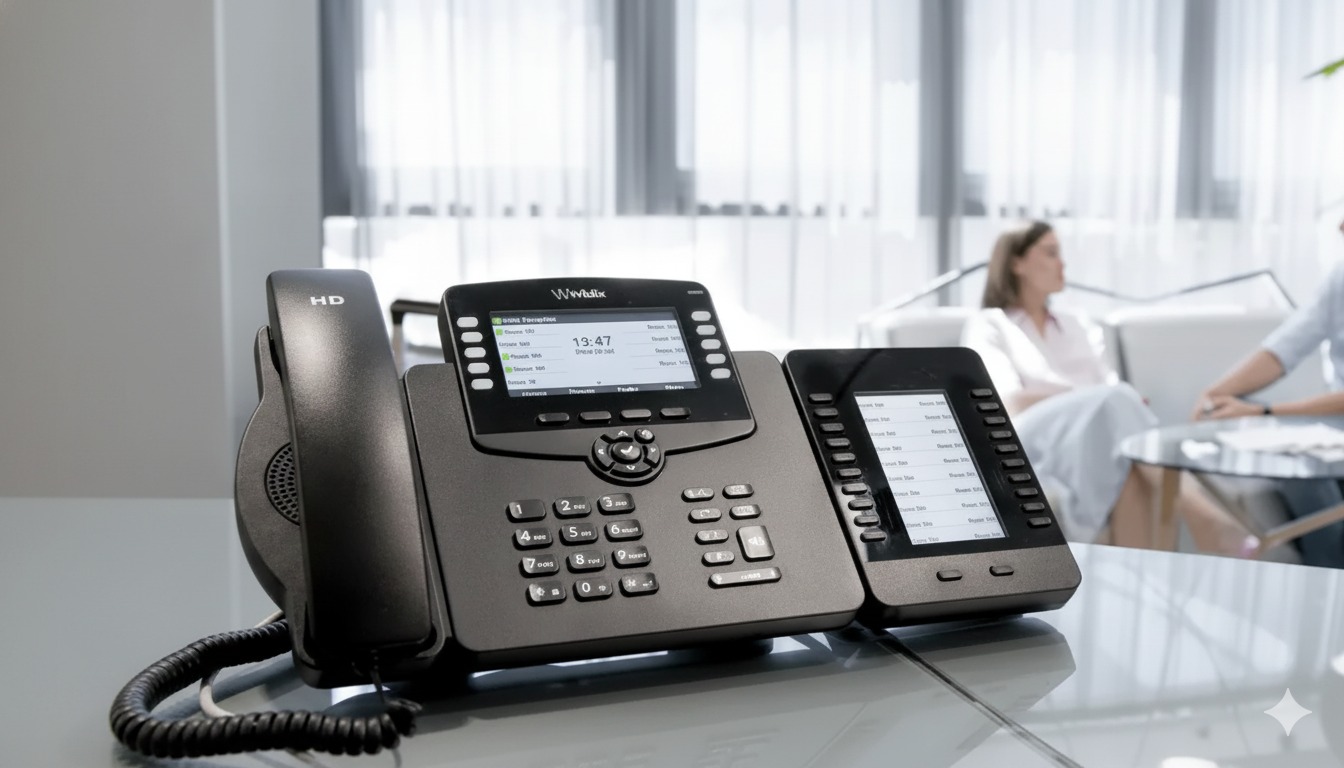
VoIP stands for Voice over Internet Protocol. Instead of sending your voice over dedicated copper phone lines, VoIP converts it into data packets and sends it over your internet connection — the same way email or a video call works. Modern VoIP systems go far beyond just calls: they include video meetings, instant messaging, file sharing, mobile apps, and integrations with tools like CRMs and calendars.
Cloud VoIP systems (like Wildix) are hosted by the provider — your phone system lives in the cloud and is accessible from any device with internet. On-premise VoIP runs on hardware at your location, giving you more control and lower ongoing costs.
What Is a Traditional Phone System?
Traditional phone systems use dedicated copper phone lines (POTS — Plain Old Telephone Service) or on-premise PBX hardware connected to those lines. They are reliable and widely understood, but in 2026 they come with real limitations: high monthly line costs, limited features, and no native support for mobile workers, video, or the kind of flexibility modern teams expect.
Feature Comparison
| Feature | VoIP | Traditional |
|---|---|---|
| Monthly cost | Lower long-term VoIP wins | Higher per-line fees |
| Upfront cost | Low (cloud) or moderate (on-prem) | Low hardware, but cabling costs |
| Call quality | Excellent on good internet | Consistent on copper lines |
| Reliability | Depends on internet / failover depends | Works without internet |
| Mobile workers | Full support — any device VoIP wins | Limited or none |
| Video & chat | Built in VoIP wins | Not available |
| Scalability | Add users instantly VoIP wins | Requires new lines / hardware |
| CRM integrations | Yes — Salesforce, HubSpot, etc. VoIP wins | None natively |
| Works without internet | With failover config | Yes Traditional wins |
| Setup complexity | Moderate — needs IT or a partner | Straightforward |
Did you know? VoIP wins on 7 out of 10 comparison factors for typical Central Coast businesses. The only clear traditional advantage is operating without internet — and that is solved with a backup connection that costs a fraction of what businesses pay for traditional lines.
When VoIP Is the Right Choice
VoIP is the better fit for most Central Coast businesses in 2026. Choose VoIP if:
- Your team works remotely or on mobile — VoIP follows your staff anywhere
- You have multiple locations — one system, one bill, full connectivity between sites
- You want to reduce monthly telecom costs over the next 2–3 years
- Your team needs video meetings, group chat, or screen sharing
- You want your phone system to integrate with your CRM or ticketing software
- You are growing and need to add users without calling the phone company
When Traditional Still Makes Sense
There are situations where a traditional setup still has merit — though they are increasingly rare:
- Your internet connection is genuinely unreliable and you cannot add a backup connection
- You operate in an environment where internet access is restricted (some government contexts)
- Your business has minimal communication needs and the simplicity of a landline is preferred
Even in these cases, a properly configured VoIP system with dual WAN failover can address the reliability concern. A backup cellular or fiber connection costs a fraction of what businesses pay for traditional lines.
What Happens If the Internet Goes Down?
The most common concern we hear: "What if the internet goes down?" It is a fair question — and one that has a good answer. A well-configured VoIP system includes failover options: calls automatically route to mobile phones, calls roll to another location, or a backup internet connection kicks in.
CENCOM configures dual WAN failover during every installation — so you are protected before the first call is ever made. When your primary internet drops, your phones keep working.
The Verdict for Central Coast Businesses
For the vast majority of San Luis Obispo and Central Coast businesses, VoIP delivers more features, lower long-term costs, and better flexibility than traditional phone systems. The key is getting it set up correctly — with proper internet infrastructure, failover configuration, and local support when anything goes wrong. That is exactly what CENCOM does.
What to Expect When You Upgrade
Switching from traditional to VoIP does not need to be disruptive. Here is what a typical CENCOM transition looks like for a Central Coast business:
- Free consultation — we assess your current setup, internet connection, and needs
- Custom quote — transparent pricing, no hidden fees
- Number porting — your existing business numbers transfer over (typically 5–10 days)
- Installation — CENCOM handles everything on-site, typically 1–3 days
- Staff training — we train your team before we leave
- Local ongoing support — a real person answers when you call us
Call us at (805) 781-2292 or contact us online to start the conversation. We have been doing this on the Central Coast since 1982 — we know what works here.
Not sure which setup makes sense for your specific business? Call us — we will walk you through it in plain English and give you a free recommendation and quote.
Get a Free Consultation